Loading...
Searching...
No Matches
Draw a line or candle chart
Use a chart for line or OHLC candle data from an immutable model. Defaults are line mode, automatic visible-range scaling, ASCII candle glyphs and no candle gap. The chart displays data; navigation and application commands belong to surrounding controls. A loaded configuration requires a typed factory supplying the model and accessor in C++; see resource registration.
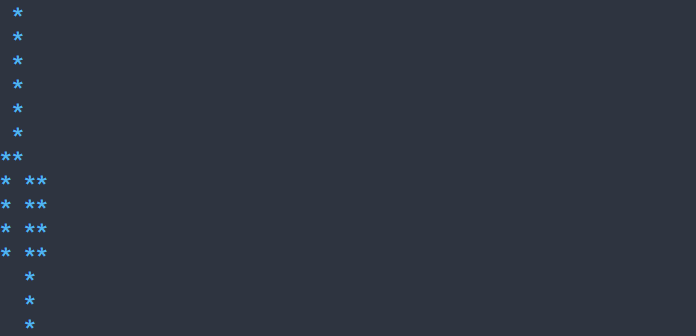
Four price buckets rendered at the left of the chart
The example has four buckets. The default is one bucket per column, so the remaining plot width is empty; the data is not stretched.
Styling reference
The Chart type paints the plot using its resolved normal style; ChartOptions::background is its manual default. Use foreground, background (#RRGGBB) and bold, italic, underline (true or false). A state-free rule supplies all variants, but chart painting uses normal. See the cascade and size constraints; min-width is state-independent.
Series use ChartOptions::line, rising and falling cell styles, rather than separate PSS parts. Their default foregrounds are #50b4f0, #3cc878 and #e65a5a; an unset brush background inherits the resolved plot background. ChartOptions::glyph_set selects the candle glyph set as described below.
Chart { background: #102030; }
Use Chart<T>. Both lines and candles are supported. The program below plots four closing prices as a line. Press F10 to close.
The program uses Prices, an immutable ModelSnapshot<Ohlc> adapter with four records. The adapter, headers and complete program appear below and in guide_chart.cpp.
Complete program
#include <array>
#include <portals/ui.hpp>
#include <utility>
using namespace portals;
public:
Prices() : ModelSnapshot(1, 4) {
}
return {RangeState::READY, std::span(rows_).subspan(static_cast<std::size_t>(range.first), range.count), {}};
}
private:
const std::array<ModelRow<Ohlc>, 4> rows_{
{{{1, 1}, {10, 14, 9, 12}}, {{2, 1}, {12, 16, 11, 15}}, {{3, 1}, {15, 15, 10, 11}}, {{4, 1}, {11, 14, 10, 13}}}};
};
int main() {
using namespace portals;
// clang-format off
return [] {
auto scene = ui::scene([](ManagedScene &owner) {
return std::optional{price};
}, ui::ChartConfig<Ohlc>{.options = {.mode = ChartMode::LINE}});
});
});
return std::move(scene)
| ui::onKey("F10", ui::quit);
} | ui::runApp();
// clang-format on
}
Additive lifecycle owner over one existing Application subtree. UI affine and nonmovable....
Definition managed.hpp:530
std::expected< ManagedModel< T >, ManagedError > model(std::shared_ptr< const ModelSnapshot< T > > initial, ModelOptions options={}, ManagedViewHandler< T > prepared={})
Create a scene-owned model and a weak typed UI handle.
Definition managed_views.hpp:65
Immutable list/table provider storage, independent of view/source lifetime. Implement read as bounded...
Definition model.hpp:94
@ LINE
Join consecutive finite closes, leaving gaps disconnected.
Definition chart.hpp:50
@ READY
Exactly the requested immutable rows are available.
Definition model.hpp:47
One domain bucket; finite values satisfy low <= open/close <= high.
Definition chart.hpp:14
Half-open logical row interval; arithmetic is checked before provider access.
Definition model.hpp:35
Named owning settings for a chart recipe; defaults match the positional factory.
Definition ui_virtual.hpp:324
The standalone guide project builds target guide_chart; run the resulting executable in a terminal. It links portals::core.
ChartMode::LINE connects consecutive valid close values. Change the mode to ChartMode::CANDLES to display the same open/high/low/close records as candles. The accessor returns optional<Ohlc>; nullopt creates a gap. The scene handles preparation and rendering. Pending data requires prepared in ui::ChartConfig<T>.
Terms: recipe, frame, ownership.
API reference and constraints
Canvas emits clipped widget-local cells during a retained widget's paint. Chart<T> is a retained widget: prepare it between frames, then use the normal WidgetTree layout/paint and renderer path. Neither component owns terminal I/O or a frame loop. See model, widget tree, renderer, and scheduler.
One provider, two views
A table and chart use independent range consumers of the same Model<T>. Capture one model pin, an immutable ModelFrame<T> with data and availability, after scheduler dispatch and pass it to both preparations.
The accessor borrows a typed immutable row, returning an optional Ohlc presentation value containing open, high, low and close prices. A custom record can expose its OHLC member without copying its business model. The retained range and frame keep provider storage alive. Accessors run only during preparation and must not retain row borrows, mutate the tree/model, block, or perform I/O. Getter reads use tree.read; all view mutation, preparation and destruction belong to the UI owner.
prepareChart(..., viewport, first) shows consecutive domain buckets beginning at first, one bucket per column by default. In candle mode, candle_gap adds nonnegative empty columns between buckets. The visible count is rounded up from viewport.width / (candle_gap + 1); consecutive domain records are retained, never skipped. Line mode ignores candle spacing. It reads at most viewport.width rows and never scans the full model. Empty/zero-height windows read no rows. A provider that has finer-grained history must aggregate to the desired domain resolution before publication; the chart does not silently skip domain records. The Model's range budget remains authoritative: an oversized requested viewport is an error.
ChartOptions::glyph_set selects portable ASCII candles (| / #) or BOX_DRAWING candles with thin wicks, filled block bodies and horizontal doji. Unicode brushes fall back to ASCII under an ambiguous-wide width policy so every brush still occupies exactly one cell. The dashboard selects Unicode by default and ASCII with --ascii, with one empty column between candles in both modes; the library preserves its portable, densely packed ASCII default.
A chart bound to StyleEngine uses the resolved normal style for its plot background. Line and candle brushes inherit that background unless their own CellStyle::background is explicit. Their foreground colors remain independent, preserving rising/falling meaning across theme changes. Without a theme, the same inheritance uses ChartOptions::background. Theme replacement repaints the prepared chart without rereading the model.
Pending reads return one ModelRequest<T> for caller dispatch. Complete it with an immutable same-revision provider result, dispatch the scheduler, pin again, and prepare. Pending/failed data paint a blank background and are distinguishable through rangeState(). New publication cancels stale work through the existing Model contract. Removing a chart cancels its outstanding request; no worker is joined. Failed preparation preserves the prior presentation. A foreign pin is rejected before provider reads or accessor calls.
Domain aggregation precedes display coalescing
Feed every ordered tick into the producer-owned OhlcBucket. Its constant-size state preserves first open, maximum high, minimum low and last close. add returns false for NaN/infinity without changing the aggregate. The application owns tick ordering, bucket boundaries, history retention and rejected-tick policy. Call reset() only when starting the next domain bucket.
Publish immutable snapshots of that aggregate; do not put raw ticks in a replace-latest display queue. Model::publisher() currently uses rejecting publication. Keep one application-owned pending snapshot between the existing Scheduler display ingress and the Model queue. Both the ingress callback and retry step execute on UI; producer threads only publish through the ingress publisher.
Disconnect the ingress before destroying its borrowed pending slot. The scope outlives the connection. Snapshots must arrive in increasing revision order and include prior domain contributions. This wiring uses one extra owning pointer, not a second unbounded queue or a new model. A producer may fill a queue slot between dispatch and forwarding; retaining the pointer makes that race retryable. Only successful queue admission clears the slot. The application must handle ingress publication errors and non-backpressure forwarding errors explicitly.
The caller gates painting with its existing monotonic-clock frame deadline, independently of tick rate, and services control/data between frames. Forwarded Model publications apply during subsequent scheduler dispatch, not at admission. Queue acceptance alone does not mean that the model applied a revision; inspect the pin or Model::lastError(). Do not busy-loop retry inside a callback.
Coordinates, gaps and paint
Logical Y grows upward; cell Y grows downward. Automatic Y scale reads only prepared valid samples (close for line, high/low for candles). An explicit finite ChartRange overrides it. The maximum maps to row zero and minimum to the last row, with nearest-cell rounding. Equal bounds center samples vertically. Single points remain visible. Scaling handles subnormal values and opposite finite double extremes without converting a nonfinite coordinate to an integer.
An absent accessor result, any nonfinite OHLC field, or invalid OHLC ordering (low <= open/close <= high) is a gap. Consecutive valid closes connect; gaps break the line. Finite points outside an explicit Y window remain part of their segment: logical clipping retains crossings before cell conversion. Candles clip their high-low wick and open-close body separately. An entirely offscreen segment/candle emits no data cells. Empty data only clears the background.
The line brush is *; the default ASCII candle wick is | and its body is #. The BOX_DRAWING set uses a horizontal doji whenever open and close map to the same screen row, including values made indistinguishable by rounding or clipping. ChartOptions selects mode, explicit/automatic scale, background, line, rising and falling styles, width policy, and candle glyph set. Both candle directions work without color through body/wick geometry; provide styles suited to the target terminal. A resized chart must be prepared with its final local viewport before painting; a mismatch returns INVALID_GEOMETRY.
For custom widget paint, Canvas(context, clip) draws styled spaces (usually a background color). Pass an optional one-cell GraphemeText brush to draw glyphs. The brush must remain unchanged through rendering of the enclosing tree frame; Canvas does not own it. Points are clipped, and lines use inclusive dominant-axis DDA with ties rounded away from zero. The line iterates only clipped dominant-axis coordinates even for INT32_MIN/MAX endpoints. The frame sink still applies surface translation and ancestor clipping. Errors propagate, and the caller must discard partial commands when painting fails.
No indicators, exchange connection, automatic time-bucketing, resampling, interactive chart navigation, axis labels or standalone application runner are provided by this component.
Reusing completed pages during navigation
Chart preparation can reuse its retained immutable completion snapshot for a new consecutive interval under the current model pin's revision, row count and read budget. Providers may prefetch a bounded page around an exact request. Only the current interval is sampled; paint performs no cache reads. A miss remains pending, and failed provider reads cannot fall back to older ready data. This does not merge consumer results or change ModelFrame::read base-snapshot semantics.